


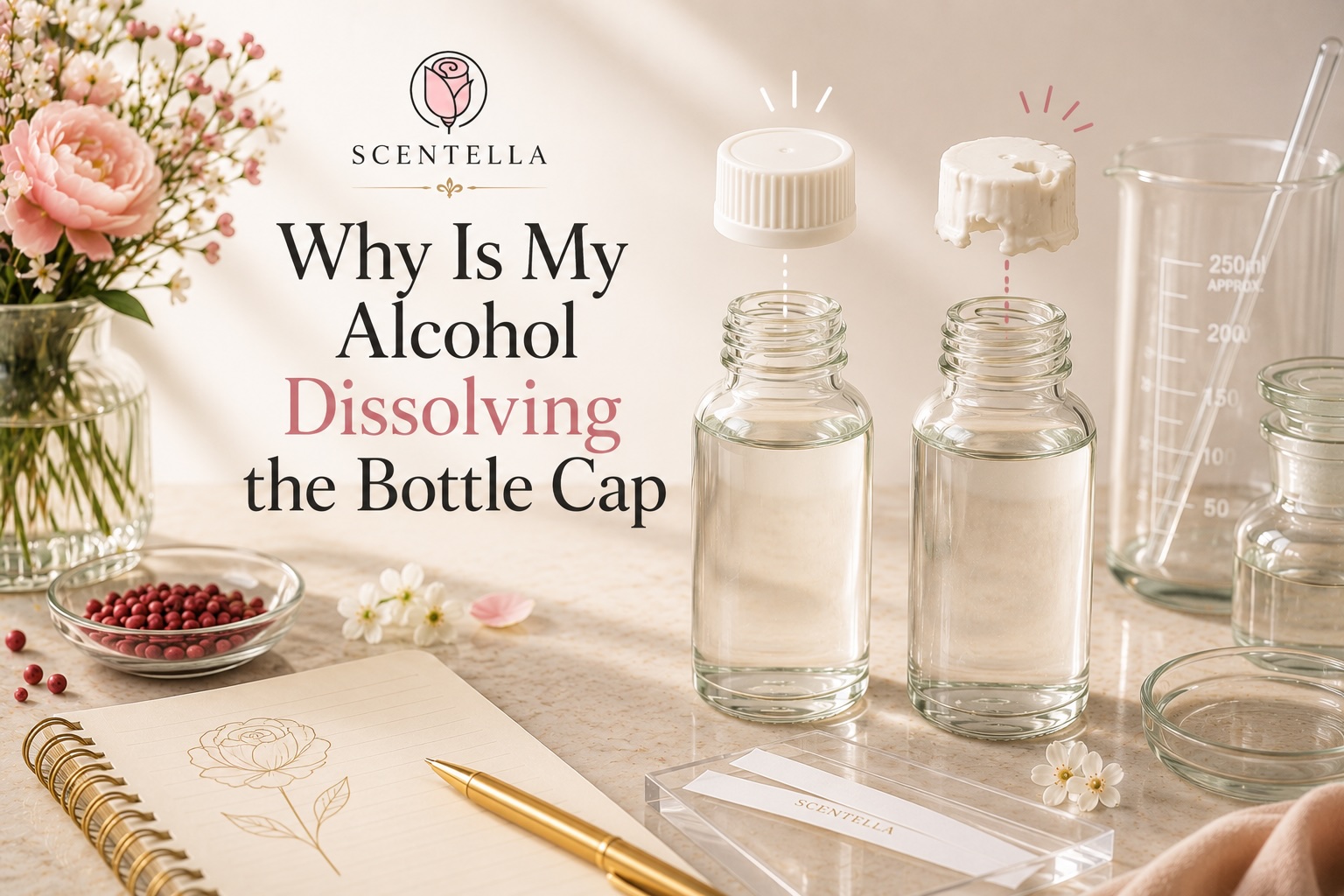
You’ve filled your perfume bottles, capped them, and a few days later you notice the caps are becoming sticky, warped, or starting to degrade. Or the inner seal has dissolved and you’re finding traces of it in the perfume. This is a common problem for perfume resellers — and it’s almost always a packaging compatibility issue, not a problem with the alcohol itself. In fact, if your high-concentration perfumer’s alcohol is reacting with certain plastics, it’s doing exactly what high-concentration ethanol does. The issue is using the wrong cap material.
Ethanol — particularly at 95–96% concentration — is a powerful solvent. At these concentrations, it’s aggressive enough to dissolve, swell, or degrade certain types of plastic and rubber. This is a well-understood chemical property, not a defect.
The problem occurs when bottle caps, inner seals, or sprayer components are made from materials that aren’t compatible with high-concentration alcohol. When ethanol comes into prolonged contact with incompatible plastic or rubber, it can:
The main offenders are:
For perfume formulation with high-concentration perfumer’s alcohol, look for:
This problem is especially common with pump sprayers, because the pump mechanism contains multiple small components — gaskets, tubes, valves — that may not all be alcohol-compatible. A cheap generic pump sprayer that works fine with water-based products will often degrade when used with high-concentration perfumer’s alcohol.
If your pump sprayer is leaking, clogging, or showing signs of degradation after a short period, the internal components are likely not alcohol-rated. Source sprayer pumps specifically designed for fragrance or alcohol use — these are readily available through cosmetic packaging suppliers and make a significant difference in product longevity and quality.
Here’s the honest flip side: if your high-concentration alcohol is reacting with plastic caps, it’s actually confirmation that your alcohol is genuinely high-concentration. Low-concentration or industrial-grade alcohol with significant water content is far less aggressive toward plastics. If your perfumer’s alcohol isn’t reacting with incompatible plastics at all, it might be worth questioning whether the concentration is what it should be.
The solution isn’t to use weaker alcohol — it’s to use the right packaging for the alcohol you’re working with.
For questions about perfumer’s alcohol, packaging compatibility, or formulation, WhatsApp us at 60176503882 or browse our range at scentella.com.my/products.
Is it safe to sell perfume if the cap has been slightly degraded?
We’d advise against it. If the cap material has started to degrade, there’s a risk that plastic compounds or plasticisers have leached into the formula. This is a potential skin safety concern. Replace the packaging and retest before selling.
How do I know if my sprayer pump is alcohol-compatible?
Ask your supplier directly and request confirmation that the pump is rated for alcohol or fragrance use. You can also do a simple soak test — fill a bottle with your perfumer’s alcohol, fit the pump, and check after two to four weeks for any degradation, stickiness, or discolouration.
Can I use food-grade plastic caps?
Food-grade doesn’t automatically mean alcohol-compatible. Food-grade certification usually covers water-based or mildly acidic contents — not high-concentration ethanol. Always verify specifically for alcohol compatibility.
My previous supplier’s alcohol didn’t cause this problem. Does that mean it was better quality?
Not necessarily. It may mean the previous alcohol was lower in concentration — and therefore less reactive with plastics. High-concentration perfumer’s alcohol (95–96%) is more chemically active than lower-concentration alternatives. The reaction with plastic is a property of the concentration, not a defect. Use compatible packaging and the problem is solved.