


When people talk about quality fragrance, France almost always comes up. French perfumery has set the global standard for centuries — from the lavender fields of Provence to the perfume houses of Grasse. But what actually makes French fragrance oils different? And does origin really matter when it comes to the oil in your bottle?
The short answer is yes. Here’s why.
Grasse, a small town in the south of France, has been the centre of the global perfume industry since the 16th century. What started as a leather-scenting trade evolved into one of the most sophisticated fragrance manufacturing ecosystems in the world. The knowledge, techniques, and standards developed there over centuries aren’t easily replicated elsewhere.
French perfumers — known as “noses” — train for years, sometimes decades, to develop the sensory precision required to create complex, balanced fragrances. This deep expertise is baked into the industry infrastructure. When a fragrance oil comes out of a French factory, it’s the product of a supply chain that has been refined across generations.
France’s geography and trade relationships give its perfumers privileged access to some of the world’s most prized fragrance ingredients — Bulgarian rose, Moroccan jasmine, Indian sandalwood, Indonesian patchouli, and more. French fragrance houses have spent centuries building the supplier relationships and quality standards needed to source consistently.
The quality of the raw materials going into a fragrance oil directly affects the quality of the final scent. Better ingredients mean a more complex, nuanced, and longer-lasting fragrance — one that smells layered rather than flat.
Modern fragrance oils aren’t made entirely from natural ingredients — they use a blend of natural and synthetic aroma chemicals. The quality of these synthetics varies enormously between manufacturers. French fragrance factories, particularly those supplying the prestige market, use higher-grade aroma chemicals with more precise molecular compositions.
This matters because cheaper aroma chemicals tend to smell harsher, fade faster, and behave less predictably on skin. Higher-grade synthetics hold their character longer, project more cleanly, and blend more harmoniously with the other notes in the fragrance.
French fragrance manufacturing is known for its rigorous formulation standards. The ratio of each ingredient — down to fractions of a percentage — affects how a fragrance opens, develops, and fades. Small differences in formulation produce very different results on skin.
This level of precision is what allows a French-made dupe fragrance oil to closely capture the character of a designer original. The goal isn’t to produce something that smells similar in the bottle — it’s to replicate the full arc of the scent: the opening, the heart, and the dry-down.
The International Fragrance Association (IFRA) sets global safety standards for fragrance ingredients. Reputable French fragrance manufacturers formulate to IFRA compliance, which means the oils are tested for safety, skin compatibility, and ingredient restrictions.
This is particularly important for anyone using fragrance oils to make products that go on skin. IFRA-compliant oils give you a known safety baseline — something that isn’t guaranteed with fragrance oils sourced from lower-regulation markets.
The dupe perfume market has grown significantly in recent years, and with it, the range in quality. A dupe made from a low-grade fragrance oil might smell passable in the bottle but perform poorly on skin — fading within an hour, smelling sharp rather than nuanced, or developing in an unexpected direction as it dries down.
A dupe made from a high-quality French fragrance oil behaves differently. It captures more of the original’s complexity, projects more cleanly, and holds its character through the full wear. The gap between a good dupe and a poor one almost always comes down to the quality of the oil at the source.
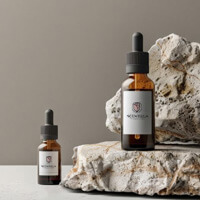
This is the reason Scentella sources all fragrance oils from a single factory in France. Not a rotating roster of suppliers — one trusted source, with consistent quality standards and full supply chain transparency. Every oil in our catalogue comes from the same French factory, formulated to the same standard.
For our customers — whether you’re mixing for personal use or building a perfume business — that consistency matters. You’re not guessing at the quality of what’s in the bottle.
Browse the full Scentella collection at scentella.com.my/products — or WhatsApp us at 60176503882 to find out more about our sourcing or to get help choosing a fragrance.
Are all French fragrance oils high quality?
Not automatically. “Made in France” is a starting point, not a guarantee. What matters is the specific factory, their formulation standards, the grade of aroma chemicals they use, and whether they comply with IFRA guidelines. A reputable French supplier with transparent standards is what you’re looking for — not just the country of origin.
What is IFRA compliance and why does it matter?
IFRA (International Fragrance Association) is the global body that sets safety standards for fragrance ingredients. IFRA-compliant oils have been formulated within tested safety limits for skin use. If you’re using fragrance oil to make a perfume you’ll wear on skin, IFRA compliance is an important baseline to look for.
Can a French fragrance oil really replicate a designer perfume?
A high-quality one can get very close. The goal of a dupe oil is to capture the character, structure, and feel of the original — not to be chemically identical. The closer the formulation quality, the more accurately it captures the original’s opening, heart, and dry-down.
Why does Scentella use only one French supplier?
Consistency. Using a single trusted factory means every oil in our catalogue is formulated to the same standard. Our customers — whether personal users or resellers — get the same quality every time they reorder, without variation between batches or suppliers.