Fragrance has been an integral part of human culture for thousands of years, evoking emotions, memories, and even influencing our behavior. While many people rely on commercial perfumes, there’s something incredibly personal and powerful about creating your own signature fragrance. Scentella oils offer a unique opportunity for anyone—whether you’re a beginner or an experienced perfume enthusiast—to craft a scent that’s uniquely yours. In this article, we’ll guide you through the art of scent blending and how to create your own personalized fragrance using Scentella oils.
What Are Scentella Oils?
Scentella oils are a premium line of essential oils renowned for their purity, natural quality, and rich aromatic profiles. Unlike synthetic fragrances, which may be laden with chemicals, Scentella oils are derived from natural plant sources like flowers, herbs, and fruits. These oils are perfect for crafting bespoke perfumes that reflect your personality and style. Whether you’re looking for something fresh, floral, woody, or spicy, the variety of Scentella oils available allows for endless creative possibilities.
The Basics of Fragrance Creation: Understanding the Notes
Before diving into blending, it’s important to understand the three key layers of any fragrance: top notes, middle notes, and base notes. Each layer plays a unique role in how a scent unfolds over time.
- Top Notes (Head Notes): These are the initial scents you smell when you first apply a fragrance. They tend to be fresh, light, and often citrusy or herbal. They evaporate quickly but create the first impression of your perfume.Examples: Bergamot, lemon, peppermint, eucalyptus.
- Middle Notes (Heart Notes): The heart of the fragrance, these notes are more rounded and complex, emerging once the top notes have faded. They often provide balance to the top and base notes and create the essence of the fragrance.Examples: Lavender, rose, jasmine, cinnamon.
- Base Notes (Dry Down): These are the heavier, deeper scents that linger the longest. Base notes provide the foundation of a fragrance and can add warmth, depth, and richness.Examples: Sandalwood, vanilla, patchouli, amber.
When blending your own fragrance, it’s essential to keep these layers in mind. A balanced perfume will have a harmonious relationship between all three types of notes.
Choosing Your Scentella Oils
Scentella oils offer a wide array of options, each with its own distinctive aroma and therapeutic properties. Depending on your personal preferences, you can choose oils that align with your desired fragrance profile. Here are a few popular options:
- Florals: Rose, jasmine, ylang-ylang, lavender.
- Citrus: Lemon, orange, bergamot.
- Herbals: Basil, mint, thyme.
- Spices: Cinnamon, clove, ginger.
- Woodsy/Resins: Sandalwood, patchouli, frankincense.
- Fruits: Grapefruit, pear, mango.
By mixing and matching oils from different categories, you can create a scent that’s uniquely yours.
Step-by-Step Guide to Blending Your Signature Fragrance
- Prepare Your Workspace: Find a clean, quiet space to work where you can focus. You’ll need a few basic supplies:
- Small glass mixing bottles (preferably 10-15ml size)
- A dropper or pipette for precise measurement
- Blotter strips or cotton pads to test scents
- A notebook to record your formulas
- Start with the Base Notes: Since base notes provide the lasting impression of your fragrance, start by adding 3-4 drops of your chosen base note(s) to your mixing bottle. Don’t be afraid to experiment by combining different base notes.
- Add the Heart Notes: Next, add the middle notes. These should account for around 50% of your blend. Add a few drops at a time, testing the scent on a blotter strip. Adjust until you find a balanced harmony.
- Finish with the Top Notes: Finally, add your top notes, which should be the lightest. Use around 30% of the total blend for top notes. These will give your fragrance its first impression but will evaporate quickly, so you want them to complement the heart and base notes without overpowering them.
- Test and Adjust: After blending, allow your fragrance to sit for at least 24 hours before testing it again. The oils will meld and evolve over time, and you might find that you need to adjust the proportions. If the fragrance feels too heavy or too light, tweak your blend until it feels just right.
- Fixative and Longevity: If you want to increase the longevity of your fragrance, you can add a natural fixative like benzoin, myrrh, or labdanum. These resins help slow the evaporation of the top and middle notes, allowing the base notes to linger longer.
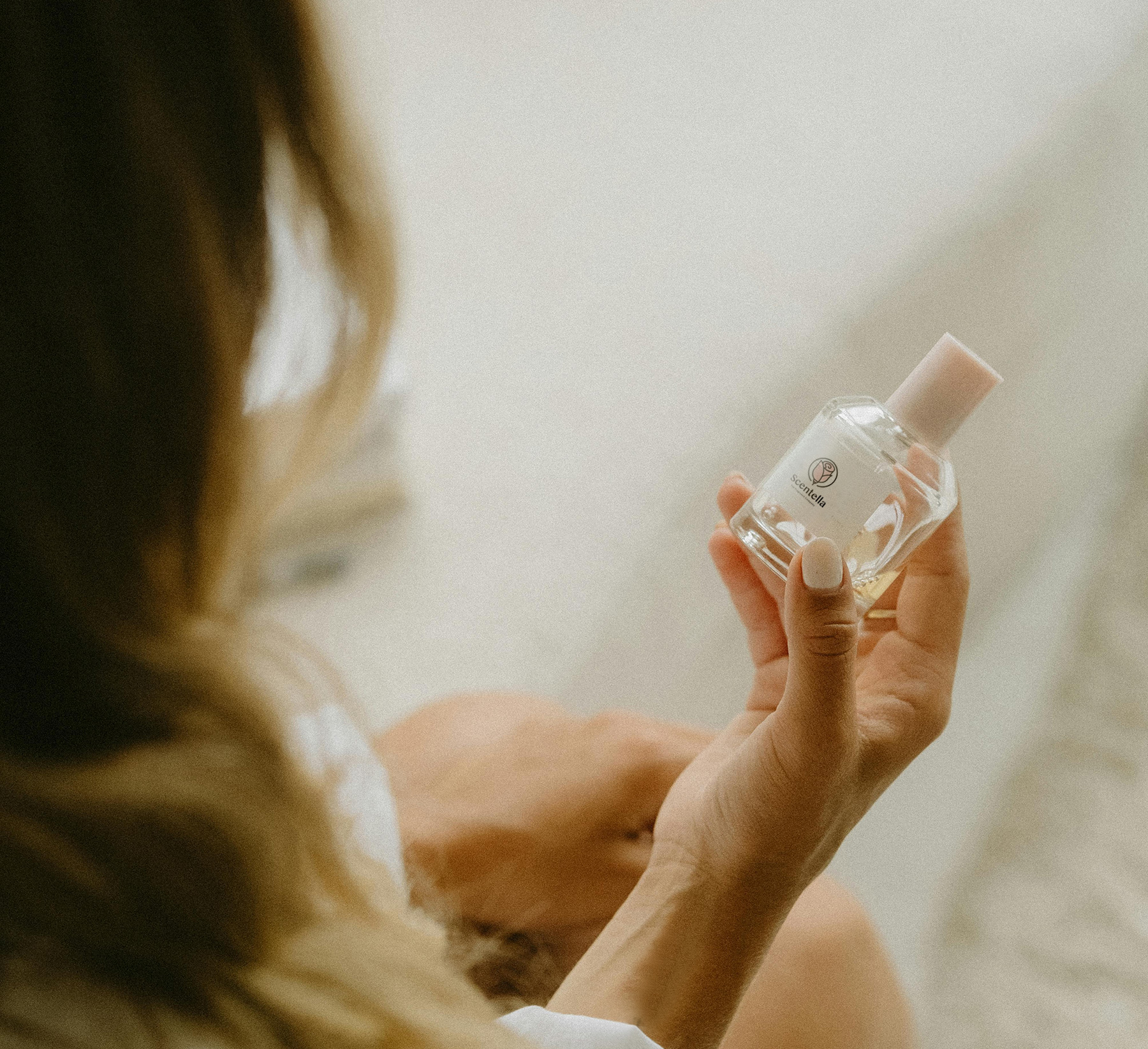
- Finalizing the Blend: Once you’re happy with your blend, transfer it to a glass perfume bottle with a spray nozzle. Let it age for at least a week to allow the oils to fully integrate and mellow. Over time, the fragrance will deepen and develop, becoming even more uniquely your own.
Tips for Success
- Keep It Simple: Don’t try to create a fragrance with too many ingredients at once. Focus on balance and harmony, and build your blend gradually.
- Start Small: Always create small batches first. This allows you to test and adjust without wasting expensive oils.
- Be Patient: Allow the fragrance to evolve. What you smell immediately after blending may not be the final result after it has rested for a while.
- Record Your Formulas: Keep detailed notes of the oils you’ve used, the number of drops, and your impressions. This will be helpful if you want to recreate or modify your fragrance in the future.
Conclusion
Creating your own signature fragrance with Scentella oils is a rewarding and creative process. Not only do you get a personalized scent that perfectly reflects your personality, but you also gain a deeper understanding and appreciation of the world of aromatics. Whether you’re crafting a light, floral summer perfume or a rich, woody scent for the cooler months, the possibilities are endless when you master the art of scent blending. Happy blending!